
Tags: Fire Restoration,
For non-emergencies use our contact form


Emergency? 24-Hrs
416.800.0000A fire can affect more than the room where it started. Smoke, soot, heat and firefighting water can move into nearby spaces. Therefore, a full assessment should review visible damage as well as areas that may need closer inspection.
Do not enter a fire-damaged property until emergency officials say it is safe. Electrical hazards, weakened materials and contaminated water may remain after the fire has been extinguished.
When conditions allow, photograph affected rooms, contents and visible damage. In addition, keep invoices, estimates and other records connected to the loss. Good documentation can help organize both the restoration project and insurance discussions.
Water from hoses or sprinkler systems can affect floors, walls, ceilings and insulation. As a result, extraction and moisture assessment may become part of the fire restoration process.
Smoke residue can travel far beyond visible burn marks. Technicians can assess affected surfaces and choose cleaning methods based on the material, residue and level of damage.
Smoke odour can remain in porous materials and concealed spaces. Therefore, restoration may require source cleaning, air management and deodorization rather than fragrance alone.
Furniture, clothing and other contents may require cleaning or specialty restoration. However, some badly damaged items may no longer be suitable for restoration.
Severely burned, contaminated or damaged building materials may need removal. This step can also provide access to concealed areas that require cleaning or repair.
Once mitigation reaches the required stage, reconstruction can move forward. Repairs may include drywall, paint, ceilings, floors, trim, cabinetry and other finishes.
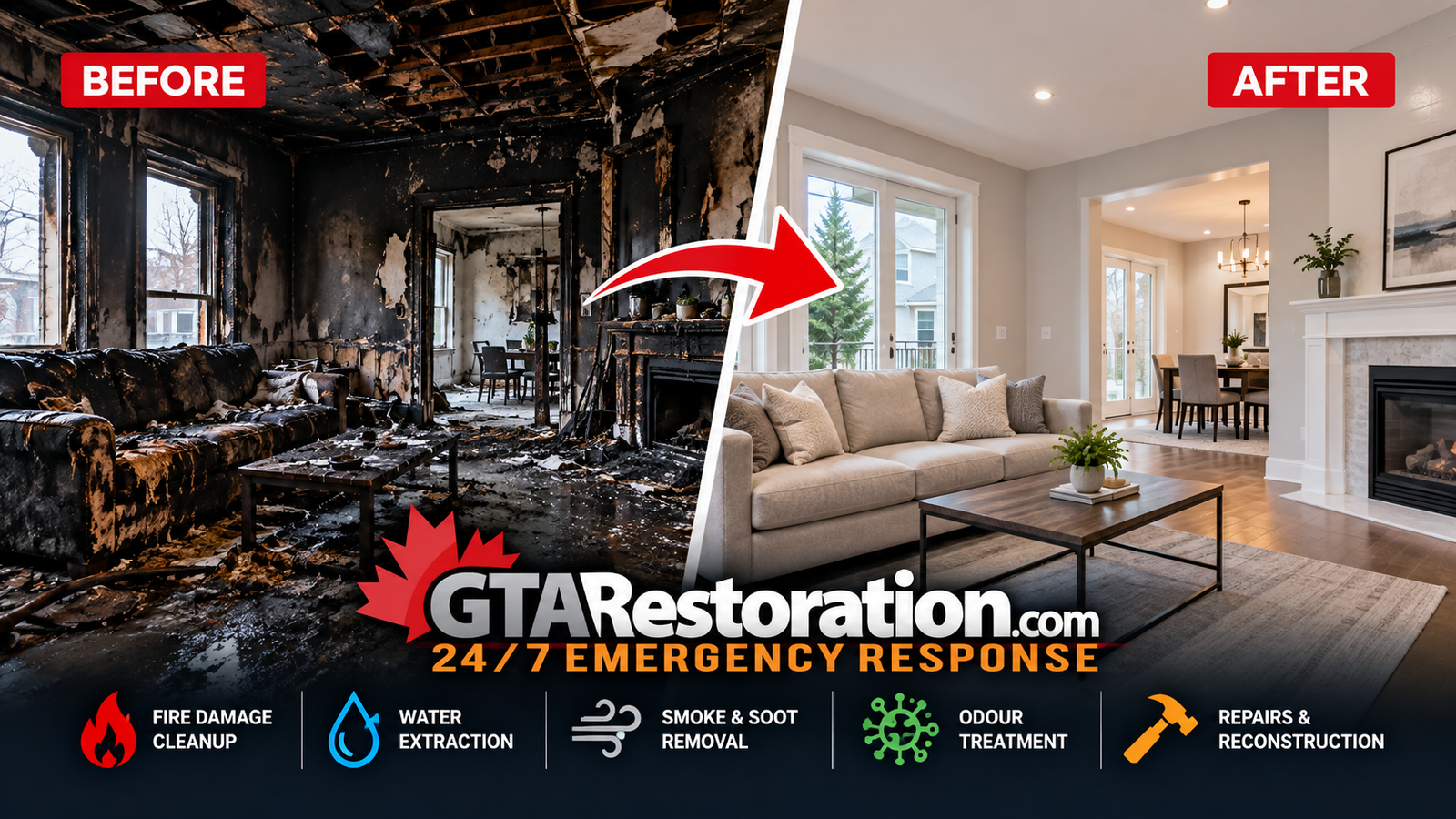
Photos taken throughout the project can show the progress from initial damage through cleanup and reconstruction. More importantly, the final condition should reflect the work completed behind the visible finishes as well as the cosmetic repairs.
GTA Restoration helps homeowners, condo owners, property managers and businesses with fire and smoke cleanup, drying, odour treatment and reconstruction support. Each project follows the conditions found at the property.
Get professional help assessing soot, smoke, firefighting water and damaged materials before cleanup and repairs move forward.
Nationwide, Local Pricing
GTA Restoration offers local flood & water damage repair, mold removal/remediation, asbestos removal/abatement, fire/smoke damage repair services and much more.
Search
After emergency officials confirm the property is safe to enter, the restoration process can begin with damage assessment, documentation and emergency stabilization.
Fire hoses and sprinkler systems may leave water inside floors, walls and ceilings. Therefore, extraction and structural drying can become part of fire restoration.
Many surfaces can be professionally cleaned, although the correct method depends on the residue, surface and amount of damage. Some severely affected materials may need replacement.
The process usually starts by cleaning or removing the source. Depending on site conditions, technicians may also use air filtration and professional deodorization methods.
After restoration, affected areas may include cleaned surfaces, dried materials and completed repairs. The final result depends on the extent of the original fire, smoke and water damage.
We Work Direct with All Insurance Companies
Wᴇ ᴀʀᴇ ᴄᴏᴍᴍɪᴛᴛᴇᴅ ᴏɴ ᴡᴏʀᴋɪɴɢ ᴡɪᴛʜ ᴇᴠᴇʀʏ ɪɴsᴜʀᴀɴᴄᴇ ᴄᴏᴍᴘᴀɴʏ ᴀᴄʀᴏss Cᴀɴᴀᴅᴀ & USA.
Learn more ↴ 
RELATED ARTICLES
follow us on 




Our Clients

Affiliates

Call Us 416-800-0000
Emergency? Immediate response 24/7
We cover all GTA 24/7.
Head Office:
250 Consumers Rd,
#10
Toronto, ON
M2J 4V6,
Open 24 hours
Downtown Office:
1 Toronto St,
#10
Toronto, ON
M5W 1A1,
Open 24 hours
For non-emergencies use our contact form
Not sure what you need?
Call us today to find the best product for your situation.
Head Office:
101 Lebovic Ave,
Unit #10
Scarborough,
ON, M1L 4T7
Hours
24-Hours Open
Downtown Office:
250 Yonge Street,
Unit #1A
Toronto,
ON, M5B 2L7
Hours
24-Hours Open
The Transformation: What Happens Before and After Fire Restoration with GTA Restoration
Get a quote today


You must be logged in to post a comment.